

Affordable Bulk Rope Options for Large-Scale Projects
 Sue Chambers
Securing the right materials is crucial for success when embarking on large-scale projects. Among the essential materials, rope stands out as a versatile and indispensable tool. Choosing the right strong rope for construction, agriculture, marine applications, or industrial use ensures safety and efficiency. Investing in durable rope guarantees performance and reduces the risk of accidents. Selecting the right type of high-quality rope tailored to your project needs is key to achieving optimal results.
Table of Contents
Why Choosing the Right Rope Matters
A good rope is more than just a piece of material—it is the backbone of many applications where reliability is non-negotiable. For projects requiring heavy lifting, anchoring, or load-bearing, selecting a thick rope with durable rope properties can make all the difference. The wrong rope can fail under pressure, leading to costly setbacks and safety risks. On the other hand, the right high-quality rope ensures your operations remain smooth and efficient, even under challenging conditions.
Key Features of High-Quality Rope
Strength and Durability
The cornerstone of any high-quality rope is its ability to withstand stress and tension. For large-scale projects, opt for ropes with high tensile strength and resistance to wear and tear. A durable rope ensures longevity even under harsh environmental conditions. These features are especially critical in industries like construction and marine, where reliability is paramount. Always choose a rope that has been tested and certified for its strength.
Versatility
Ropes come in various materials and designs, each suited for different applications. Synthetic ropes, such as polypropylene and polyester, offer excellent performance in diverse settings, making them a popular choice among project managers. Their adaptability to weather conditions and resistance to environmental wear make them indispensable. Whether for lifting, tying, or securing, these ropes meet a variety of project demands.
Cost-Effectiveness
Affordable bulk rope purchasing from trusted rope suppliers helps save costs while ensuring you receive a consistent supply of good rope for your projects. Bulk buying eliminates the hassle of frequent restocking and reduces overall project expenses. It also ensures that you have the right rope available at all times, minimizing downtime.
Suggested Synthetic Rope Products
Twisted Polypropylene Rope
A versatile and durable all-purpose rope, designed specifically for use in watery environments. Crafted from 100% polypropylene fibers, it resists moisture, floats on water, and is ideal for nautical and wet-weather applications. Twisted polypropylene rope features excellent resistance to abrasion, road salts, and UV rays, ensuring long-lasting performance outdoors, underwater, or in tough conditions. Its three-strand twisted design makes it easy to cut and splice for customized lengths.
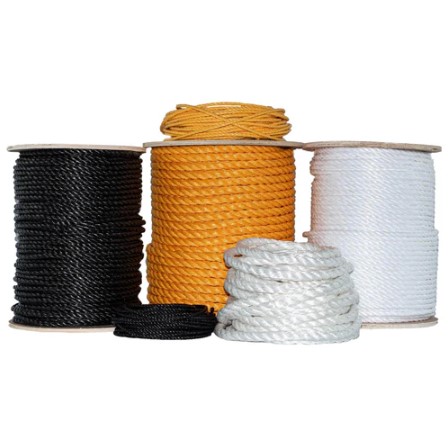
Key Features:
- Material: 100% polypropylene fibers
- Water Resistant: Floats on water, ideal for marine use
- UV Resistance: Good, black offers the best protection
- Abrasion Resistance: Excellent for rough conditions
- Rot & Mildew Resistance: Exceptional
- Chemical Resistance: Withstands acids, alkalis, and oils effectively
- Flexibility: Easy to cut and splice
Available Options:
- Diameters: 1/4″, 3/16″, 3/8″, 1/2″, 5/8″
- Lengths: By the foot, 50ft, 100ft, 300ft, 600ft, 1200ft
- Colors: Black, White, Yellow
Solid Braid Polyester Rope
Perfectly suited for marine environments and outdoor activities, Solid braid polyester rope is made from 100% polyester to ensure strength, durability, and minimal stretch. The solid braid construction enhances its reliability, making it ideal for mooring, towing, anchoring, and other outdoor applications. It resists rot, moisture, oil, gasoline, and most chemical abrasives, ensuring dependable performance in challenging conditions.
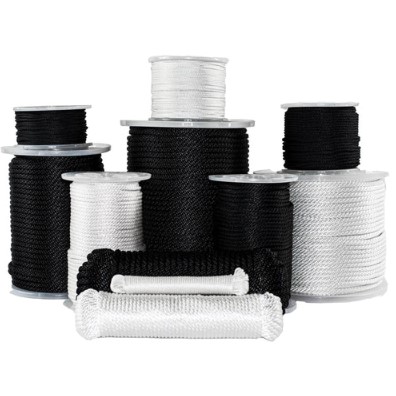
Key Features:
- Material: 100% polyester
- Construction: Solid braid for minimal stretching and maximum strength
- Weather Resistance: Resists rot, moisture, and chemical abrasives
- Chemical Resistance: Withstands oil, gasoline, and marine chemicals
- Colors: Black and White
- Applications: Ideal for mooring, towing, anchor lines, and general outdoor use
Available Options:
- Diameters: 1/8″, 5/32″, 3/16″, 1/4″, 5/16″, 3/8″
- Working Load Capacity:
- 1/8″ = 72lbs
- 5/32″ = 99lbs
- 3/16″ = 148lbs
- 1/4″ = 234lbs
- 5/16″ = 315lbs
- 3/8″ = 486lbs
- 1/2″ = 810lbs
- Lengths: Varies by Diameter
Finding Reputable Rope Suppliers
Sourcing from trusted rope suppliers ensures you get value for your money and a reliable product. When evaluating suppliers, consider their product range, customer reviews, and after-sales support. Some renowned dealers in the market include Superior Ropes Co., Titan Rope Solutions, SGT Knots Supply Co., and AnchorLine Distributors. These suppliers are known for offering a variety of thick rope options tailored to different project needs. They also provide detailed product specifications and customer service to help you make the right choice. Building relationships with reliable rope dealers ensures access to consistent and high-grade supplies.
Bulk Rope Options for Every Need
Bulk purchasing provides cost advantages and eliminates the hassle of running out of supplies mid-project. Reputable rope suppliers often offer discounts for bulk orders, ensuring affordability without compromising on quality. By buying in bulk, you can ensure a steady supply of durable rope for large-scale tasks. Additionally, bulk purchases help streamline project planning and reduce logistical challenges.
How to Choose the Best Rope for Your Project
Assess Your Requirements
Identify the specific purpose of the rope in your project. Whether you need a strong rope for load-bearing or a lightweight good rope for simple tying tasks, understanding your needs is crucial. Proper assessment helps avoid over-purchasing or underestimating the rope’s capabilities. This step ensures you get the most suitable rope for the job.
Compare Materials
Synthetic materials such as polypropylene, nylon, and polyester are ideal for heavy-duty tasks due to their high resistance to environmental factors. They also provide better longevity compared to natural fibers like hemp or sisal. Evaluating the pros and cons of each material allows you to make an informed decision.
Verify Quality
Ensure the rope meets industry standards by reviewing certifications and conducting quality checks. A high-quality rope will have a consistent diameter, tensile strength, and reliable performance. Checking the manufacturer’s reputation and customer reviews can also provide insights into the product’s reliability.
Maintenance Tips for Longevity
Proper care and maintenance of your durable rope ensure it serves you well for years. Store your rope in a dry, cool environment away from direct sunlight. Regularly inspect it for signs of wear or fraying, especially after heavy use. Cleaning the rope after exposure to chemicals or dirt can also extend its life. Always follow the manufacturer’s care guidelines for optimal performance.

Frequently Asked Questions
What is the most durable rope for outdoor use?
Polypropylene and polyester ropes are excellent choices for outdoor applications due to their UV and abrasion resistance. Both materials are designed to withstand harsh weather conditions, making them reliable for prolonged outdoor use.
Can synthetic ropes handle heavy loads?
Yes, synthetic ropes like polyester and nylon have high tensile strength, making them suitable for heavy-duty tasks. They are designed to endure significant weight without compromising on performance.
Where can I find affordable bulk rope options?
Reputable suppliers like SGT Knots Supply Co. and AnchorLine Distributors offer competitive prices for bulk orders of thick rope options. They also provide guidance on selecting the right rope for your specific needs.
What is the difference between polypropylene and polyester ropes?
Polypropylene is lightweight and floatable, ideal for marine use, while polyester is stronger and more resistant to abrasion, making it suitable for industrial applications. Each material serves a unique purpose, so the choice depends on the intended use.
How do I maintain my rope to ensure longevity?
Store your rope in a dry place, away from direct sunlight, and inspect it regularly for any signs of damage. Cleaning the rope and avoiding harsh environments can also enhance its durability.
Conclusion
Selecting the right rope for your large-scale project can significantly impact its success. By choosing strong rope options and sourcing from reliable rope suppliers, you can ensure safety, durability, and cost-efficiency. Consider synthetic options like polypropylene and polyester ropes for their versatility and resilience, and remember to maintain your good rope properly for extended use. With careful planning and high-quality materials, your projects will achieve the desired results efficiently and effectively.